
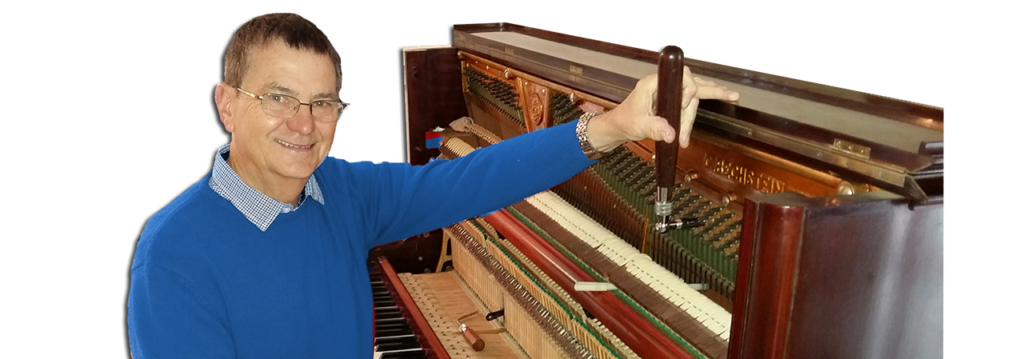
Tuning apps, smart tuners and now AI can tell you, very precisely, whether a note is sharp or flat. That’s useful, and I’m all for good tools. But after more than 60 years with pianos, I can tell you that measuring pitch is the easy part. What a piano really needs is a pair of trained ears, steady hands and someone who knows what to look for.
So where does a person still matter? Here’s what an app can’t do.
Listening, not just measuring
An app hears a frequency. A tuner hears a piano. Each note on most pianos has two or three strings that must agree perfectly, and the tuning has to be “stretched” slightly across the keyboard so it sounds right to the human ear rather than to a meter. Getting that balance right, for that particular piano in that particular room, is a judgement made by ear.
Then there’s tone. Two pianos can be perfectly in tune and still sound completely different. Whether a note is harsh, dull or uneven is something you hear, not something you read off a screen. That’s where voicing comes in.
Making the tuning last
Knowing a note is flat doesn’t fix it. The tuning pin has to be turned and set firmly, and each string has to be settled so that the new tension spreads evenly along its length. That’s why tuners play the keys so firmly. Done by feel, with the right technique, a tuning holds for months. Done badly, it drifts within weeks.
Spotting trouble early
Every time I open a piano I’m looking for more than the tuning. Moth damage in the felts, a mouse nest under the keys, sticking keys from damp, worn hammers, loose tuning pins or a cracked soundboard. Caught early, most of these are small jobs. Left alone, they become expensive ones. No app will lift the lid and tell you that.
The craft of repairs
Repairs are where the hands matter most. Reshaping hammers, easing a sluggish action, regulating the keys so they all feel the same under your fingers: this is fine, careful work that’s learned over years at the bench. It’s also about judgement, knowing when a repair is worth doing and when it isn’t.
Honest advice
Should you restore your grandmother’s piano or buy another one? Is that bargain on the internet really a bargain? What is your piano actually worth? These are human questions with human answers, and often the most valuable part of a visit is the conversation over the piano.
A few human tips
Before the tuner arrives
- Clear the top of the piano, and anything stored on or around it.
- Keep the room as quiet as you can: switch off fans, the TV, radios and the vacuum cleaner.
- Let the tuner know if any notes have been bothering you, or if the piano has been moved recently.
Offer the tuner a cup of tea
Tuning takes concentration, and a cup of tea halfway through is always appreciated. It’s also a good moment to ask questions about your piano.
Yvonne’s tip for tuners: wear nice socks
My wife Yvonne, who looks after my bookings, always reminds me: in many homes the shoes come off at the door, so make sure your socks are presentable. It’s a small thing, but people notice!
Apps will keep getting cleverer, and that’s fine. But a piano is a living instrument made of wood, felt and steel, and it still needs someone who can listen to it, care for it and tell you honestly what it needs.